
BLUF
Bottom Line Up Front

BLUF stands for "Bottom Line Up Front." It's a communication technique that prioritizes presenting the most crucial information at the very beginning of your message.
The BLUF method originated in the military, particularly within the United States Army. It was developed to improve the clarity and efficiency of communication in high-pressure situations where quick decision-making was crucial. Faced with time constraints and urgent conditions, military personnel needed a way to ensure clear and concise communication in briefings, reports, and other written documents. By prioritizing the most critical information at the start, "bottom line" upfront, recipients could grasp the critical information quickly without wading through extensive details.
BLUF's principles are valuable beyond the military. In today's work environments, information overload is common. Using BLUF in emails, presentations, and meetings helps ensure your audience gets the key takeaway right away.
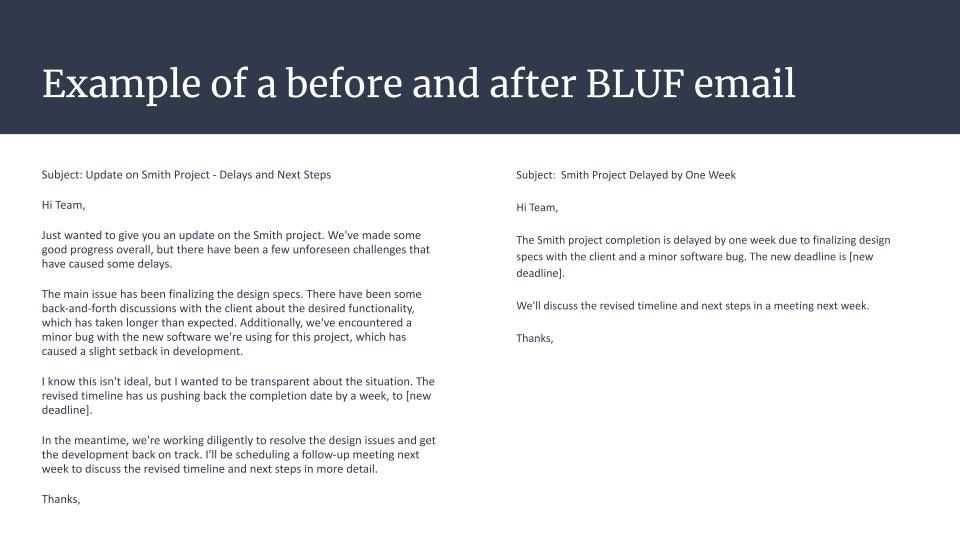
For product managers and leaders, BLUF is a powerful tool for:
Prioritization: It forces clear identification of the most important message.
Decision-Making: By highlighting key details upfront, leaders can facilitate faster and more informed decisions.
Focus and Clarity: It promotes clear and concise communication, avoiding information overload for stakeholders.
Pitfalls to avoid:
Lack of Context: While BLUF prioritizes the bottom line, some context is still necessary. Don't skimp on essential details that support your main point.
Ignoring Audience: Tailor your BLUF to your audience's needs. What's crucial for a senior leader might differ from information needed by a junior team member.
Here's how to implement it:
Emails: Start with the main message or request. For example, "We need to delay the product launch by two weeks due to unforeseen technical issues."
Reports and Presentations: Begin with a summary of conclusions or recommendations. For example, "Our analysis shows that expanding into the Asian market will increase our revenue by 20% within the next year."
Meetings: Open with the agenda or key decisions that need to be made. For example, "Today's meeting is to decide on the new feature prioritization for the upcoming release."
Daily Stand-ups or Updates: State the most critical updates or blockers first. For example, "The main issue we're facing today is a bug in the payment gateway integration that needs immediate attention."
Try applying the BLUF technique in your next team email or project update. Observe how it changes the dynamics of your communication and the response from your audience. Oh, and do share your experiences and tips in the comments below :)